Silicone Toilet Brush vs Bristle Toilet Brush: Pros and Cons
Ask ten buyers what a silicone toilet brush is and you will get three or four answers. In most catalogues the term covers any soft, flexible, non-bristle head, whether the moulder ran silicone rubber or a thermoplastic elastomer such as TPR. Both feel rubbery in the hand. Both rinse cleaner than a tufted head. Neither is automatically the right SKU for your market. So here is the comparison that decides reorders: hygiene, drying, rim reach, stain removal and holder format.
Silicone or TPR? Check the resin before the price
Silicone rubber is a cured, thermoset material. Once moulded it will not melt again, and it keeps its flexibility across a wide temperature band. Thermoplastic elastomer, the TPR and TPE family, softens when heated, so it suits high-volume injection moulding and in-plant regrind.
In daily use the difference is small. In tooling, labelling and pack copy it is not. Call a TPR head "silicone" in a market with clear labelling rules and you own that problem. Ask the factory which resin it runs, and get the head material written on the spec sheet, not just the artwork.
Where the silicone toilet brush wins
Flexible fins. A moulded head carries fins, lips or a cup shape, and it bends to follow the under-rim channel instead of skidding across it. That ledge under the rim is where a lot of the smell lives. A head that conforms to it does work a straight tuft cannot.
Rinsing. A tufted head holds its bristles in holes. Every tuft base is a small pocket where residue sits, and the rinse water never quite reaches the bottom of it. A one-piece moulded head has no holes. Rinse under the tap, shake once, done.
Drying. Less surface area, no capillary channels between bristles, so the head dries faster between uses. That matters in a bathroom with no window. A brush that stays wet inside a closed canister turns into a smell you cannot sell past.
Moulding freedom. One tool makes the whole head: shape, fin pattern, colour. If you want a head that matches a Pantone code across a bathroom accessories range, that is easier with a moulded part than with tufted bristles.
No staples. Bristle tufts are stapled or anchored. Staples mean metal sitting in a wet, mildly corrosive environment. Good tufting holds up fine. Cheap tufting rusts, and then the tuft sheds into the bowl.
Where the bristle head still earns its shelf space
Abrasion. Silicone fins push soil around. Stiff bristle tips scrape it off. Hard water rings, dried matter and limescale on porcelain respond to abrasion, and abrasion is what a bristle brush does best. If your market runs hard water, keep a bristle SKU in the range. That is not hedging. It is the reality of the category.
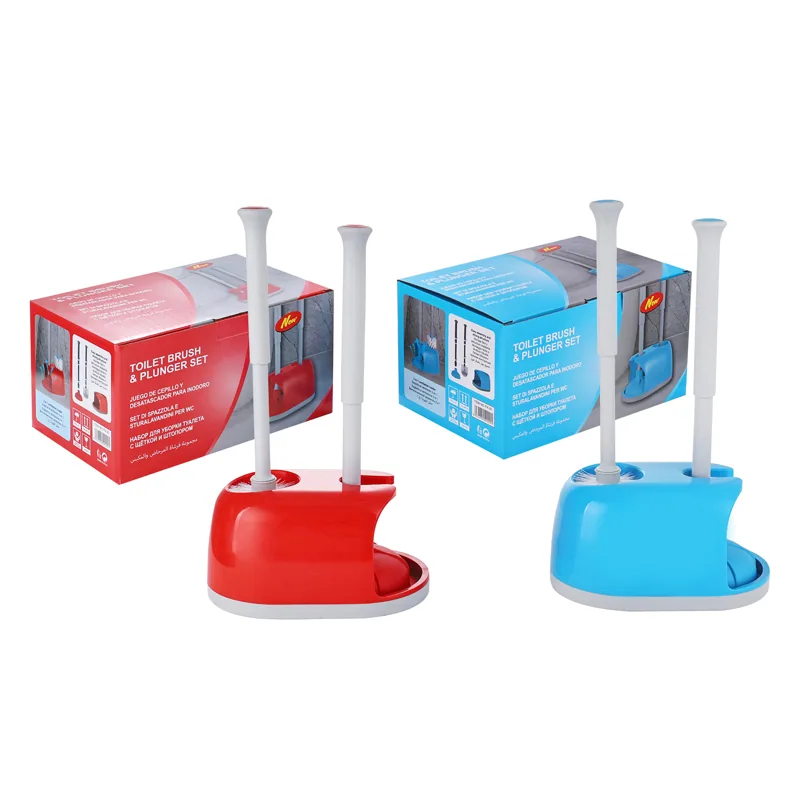
Stiffness is a dial, not a fixed value. Polypropylene bristles are softer. Nylon and PET are stiffer and hold their shape longer in hot water. Our Stainless Steel Toilet Brush pairs a steel handle and canister with a stiff nylon head, and the Toilet Brush and Plunger Set uses a high-density under-rim brush head. Same category, different jobs.
The familiar format. Shoppers know it. A bristle brush needs no explaining on the shelf, and it fits the holder styles people already own.
The trade-off? Bristles flick droplets when you scrub hard, and a dense tuft head holds water longer. Neither is a dealbreaker. Both are worth a line in your listing copy so returns stay low.
Side by side: silicone vs bristle toilet brush
| Point | Silicone / TPR head | PP or nylon bristle head |
|---|---|---|
| Rim reach | Flexible fins follow the under-rim curve | Straight tufts need angle and pressure |
| Rinsing | One-piece, no tuft pockets | Tuft bases trap residue |
| Drying between uses | Fast, low water retention | Slower, water sits in the tuft |
| Limescale and dried soil | Pushes; often needs a second pass | Scrapes; better on hard deposits |
| Splash when scrubbing | Low | Can flick droplets |
| Wear pattern | Fins can tear if bent hard or chewed | Tufts splay and shed over time |
| Holder fit | Wall-mounted sets, slim canisters | Floor canisters, plunger combos |
| Private label | Shape and colour in one mould | Colour limited to handle and bristle |
| Best for | Compact bathrooms, fast-dry needs, design-led ranges | Hard water markets, heavy soil, familiar-format shoppers |
Holders decide more than the head does
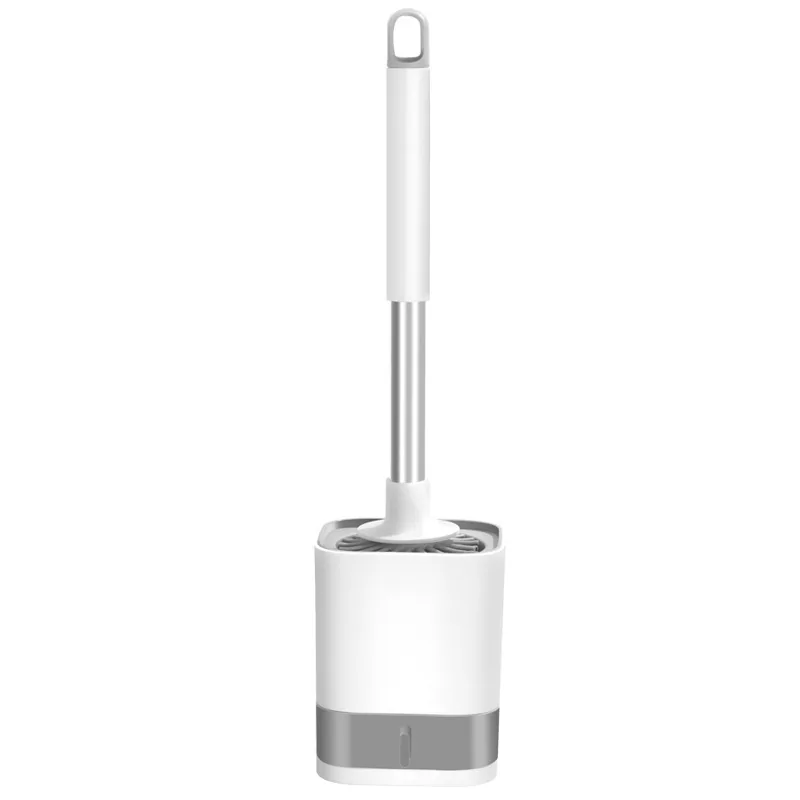
Two brushes with the same head can sell completely differently depending on the caddy. A floor canister holds more water and hides the head, which is tidy but slows drying unless the base is ventilated. A wall-mounted set keeps the brush off the floor, clears the cleaning line and suits small bathrooms where a stand gets kicked around.
In our range, the Wall-Mounted Silicone Toilet Brush Set hangs the head clear of the floor and is stocked at a minimum order of 400 pcs. The Wall-Mounted Long-Handle Silicone Toilet Brush adds reach so the user cleans standing up; that one runs at 1,500 pcs. For floor-stand buyers there is the Plastic Handled Toilet Brush, also available with PCR plastic parts if your buyers ask for recycled content.
Plunger sets are their own decision. A plunger uses suction to shift a blockage, and a brush does not. Bundling the two into one ventilated caddy with an internal drip tray sells as a single bathroom kit and saves a purchase decision. Our Toilet Brush and Suction Cup Set is built that way.
Which SKU for which buyer
Supermarket chains usually want the familiar bristle format in a colour box, plus one wall-mounted silicone option as a step-up line. Hardware chains lean toward the brush and plunger combo, because the shopper there is often mid-problem. Private-label owners go straight for the silicone head, since the moulded part carries the design language of the whole bathroom range.
None of that is a rule. It is a starting point for a range review, and it beats guessing from a competitor's shelf.
What to put in your specification
- Head material: silicone, TPR or TPE, stated on the spec sheet.
- Fin or cup geometry: how deep the fins run and whether the head reaches the bend.
- Bristle type and stiffness: PP, nylon or PET, and how stiff. This can be adjusted per market.
- Handle: length, material, and wall thickness on steel or aluminium versions.
- Holder: floor canister or wall-mounted, ventilated or closed, drip tray yes or no.
- Mounting: adhesive pad or screw fixings. Say which, because it changes the pack.
- Colour: Pantone codes or physical swatches.
- Logo and packaging: silk print, heat print or embroidery, plus colour box and carton marks.
Send the list with your target market and your shelf price band. A factory that moulds its own parts can tell you quickly where the cost sits and where it can be trimmed without ruining the tool.
How to start an order with us
CHUANGJIE has been making household cleaning tools in Yiwu, Zhejiang since 2006, and our product brand is Mopglo. The range runs to 3,000+ SKUs, backed by 300+ injection moulding machines and annual output over 5 million units, sold into 20+ countries. Mould development and production sit in one company, with 20+ senior technical staff and nearly 300 patents in new materials, plastic moulding processes and moulds.
Stock items ship at the minimum order shown on each listing. For private label, OEM orders run 2,000 to 8,000 pieces per style per colour: you confirm quantity, we sign the contract, you pay the deposit, you send colour references and logo files, and we customise colour, material and style. A pre-production sample is confirmed before mass production. Products pass a drop test before leaving the factory, and reinforced stainless steel or aluminium handles run 0.4 to 0.6 mm wall thickness.
Browse toilet brushes for the current range, read the OEM and ODM process if you are building a private label line, then email mopglohome@gmail.com with your quantities and market or send the quote form. One email with your spec list is enough to start.
FAQ
Is a silicone toilet brush better than a bristle brush?
Better at different jobs. Silicone heads rinse cleaner, dry faster and flex into the under-rim channel. Bristle heads scrape off limescale and dried soil. Many ranges carry both and let the shopper choose.
Can a silicone toilet brush scratch the bowl?
A moulded silicone or TPR head is softer than vitreous china, so scratching is unlikely in normal use. The bigger risk is a torn fin from rough handling, which is a wear issue rather than a damage issue.
What is the difference between silicone and TPR toilet brush heads?
Silicone rubber is thermoset and stays flexible after curing. TPR and TPE are thermoplastics that soften when heated, which suits injection moulding and regrind. Ask the supplier which resin is used and put it on the spec sheet.
What is the minimum order for your silicone toilet brush sets?
Stock items follow the minimum shown on each listing, for example 400 pcs for the Wall-Mounted Silicone Toilet Brush Set and 1,500 pcs for the Wall-Mounted Long-Handle version. OEM orders run 2,000 to 8,000 pieces per style per colour.