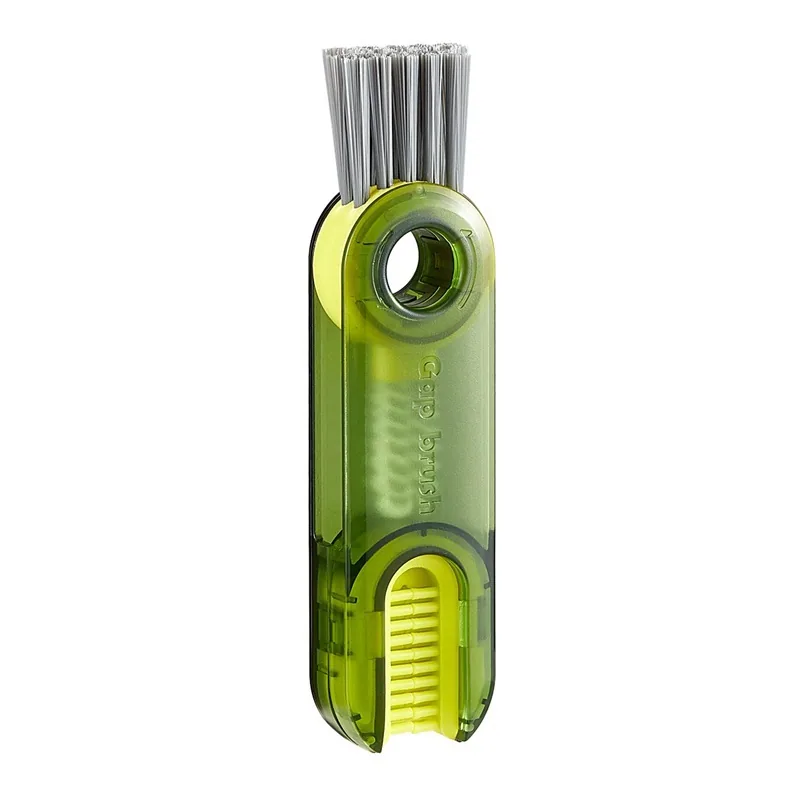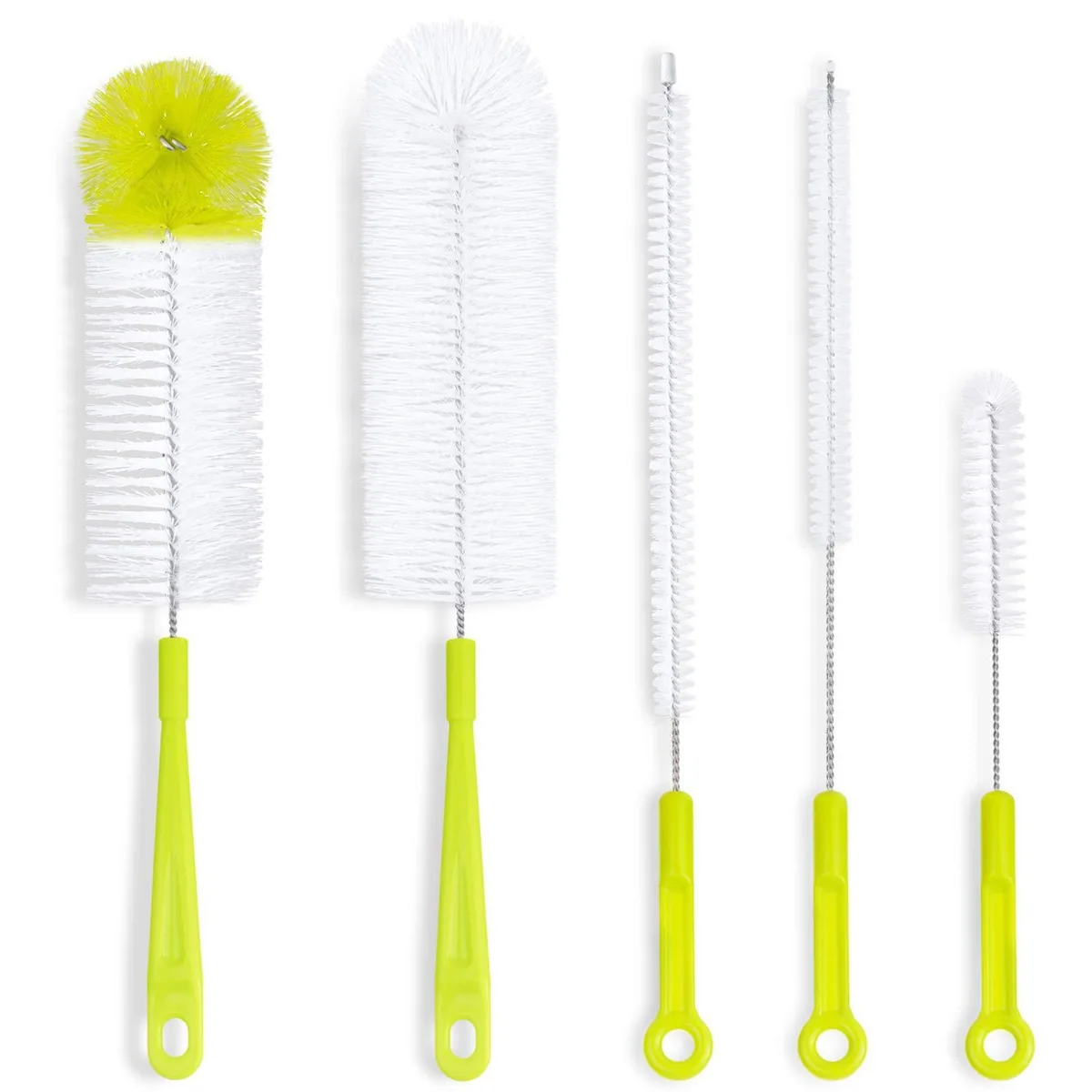
How to Clean a Toilet Brush and Its Holder

Ask a room full of buyers how to clean a toilet brush and you get a shrug. It does the worst job in the house, then sits in a wet corner until somebody decides it smells. Treat that shrug as a product problem, not only a habit problem. A head that traps water and a holder with no drainage will smell no matter how tidy the bathroom is. Our toilet brush range is built around the boring fix: drain, hang, dry.
Below is the routine your customers should be following, and the design details worth specifying before you stock.
The five minute version
- Rinse the head in the flush water after every use. Ten seconds, still over the bowl.
- Disinfect weekly with a household bathroom disinfectant, diluted as the label says.
- Let it dry hanging between the seat and the bowl, head down over the water.
- Wash the holder weekly in hot soapy water, and dry it fully before the brush goes back.
- Replace the head or the whole set once bristles splay or the smell survives cleaning.
That is it. Everything that follows is the why, and what it means for the product you choose.
Why a toilet brush starts to smell
A brush leaves the bowl carrying a film of water, paper fibre and organic matter. In an open stand with airflow, most of that dries out. In a closed canister, it does not. The head stays damp, the base stays damp, and the smell is simply bacteria feeding on the leftovers. The basic form of the tool, a handle with a scrubbing head, has not changed much in a very long time (the Wikipedia entry on the toilet brush covers the history if you want it), which means the cleaning routine still has to do most of the work.
Toilet brush cleaning is therefore a moisture story, not a scrubbing story. Two things defeat moisture: airflow and gravity.
Step 1: Rinse it while you are still over the bowl
Flush with the brush still in the water, or hold it under the refill. Move it a little so the water works through the tufts. This removes the bulk of what would otherwise dry onto the head, and it costs nothing.
Do not shake it hard across the bathroom. You will find the spray later, on the wall behind the cistern.
Step 2: Disinfect it, then rinse the disinfectant off
Weekly is a sensible default for a household bathroom. Use a household bathroom disinfectant at the dilution printed on the pack, or a dilute chlorine bleach solution mixed fresh according to the label, and let it stand for the contact time the label states. Then rinse.
Two blunt warnings. Never mix bleach with an acidic or ammonia based cleaner, because the gas that comes off is genuinely dangerous. And do not leave steel parts soaking in bleach, because chloride solutions attack stainless steel and the fittings will pit. A ten minute soak does the job; an overnight bath does damage.
If you disinfect a toilet brush in a bucket, disinfect the bucket afterwards. Sounds obvious. It rarely happens.
Step 3: Dry it hanging between the seat and the bowl
This is the step almost everyone skips, and it is the one that decides whether the brush smells by Friday. After the final flush, rest the handle under the seat so the head hangs over the bowl and drips into it. Air moves around the head. It dries. Nothing else in the bathroom gets wet.
No seat to hang it under? Then head up in the holder if the design allows, or on a hook. The one combination to avoid is a wet head sitting down inside a closed canister.
Step 4: Clean the holder, not just the brush
The holder is where the smell actually lives. Empty it, wash it inside with hot soapy water, and get into the corners with a small brush. Rinse, invert, and let it dry completely before the brush returns. Once a week is reasonable. More often in a bathroom with no window and no extractor fan.
If the holder has a removable drip tray, lift it out and wash it separately. That part is doing the dirty work for you, and it is easy to forget because it is hidden at the bottom.
Design features that do half the cleaning for you
Care instructions on a pack only go so far. The product can make the routine shorter or longer.
| Feature | What it changes | Where it fits |
|---|---|---|
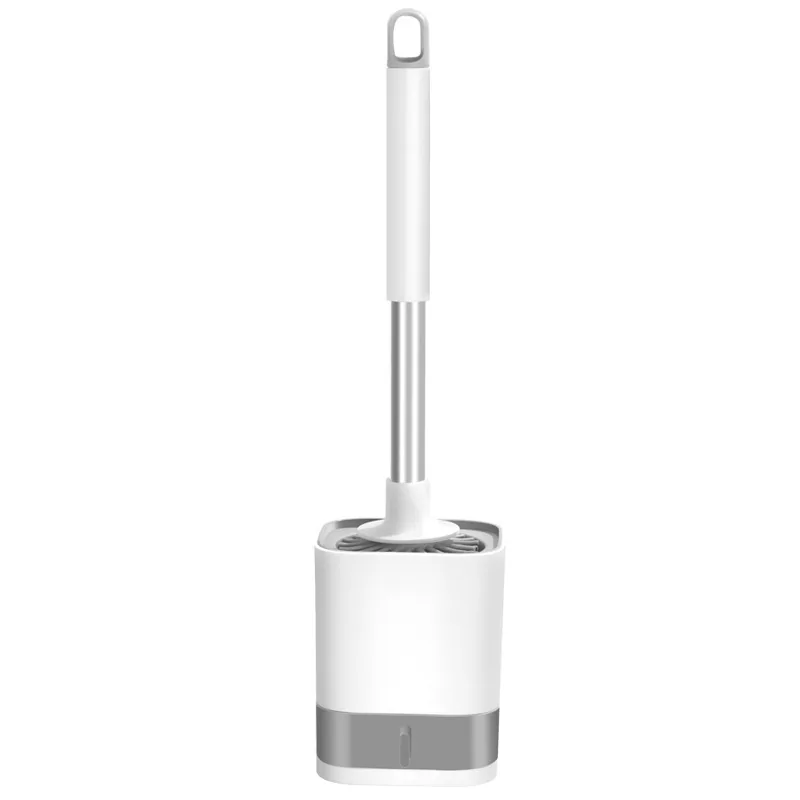
| Ventilated base with internal drip tray | Air reaches the head and drips collect in one removable part instead of pooling in the base | Family bathrooms and value sets. Our Toilet Brush and Suction Cup Set uses this layout |
| Wall mount | Takes the stand off a wet floor, keeps the head off the tiles and speeds drying | Small bathrooms, rentals, hotel refits. The Wall-Mounted Silicone Toilet Brush Set has a low minimum order of 400 pcs |
| Silicone or rubber style head | Water runs off instead of soaking into tufts, so it dries fast and rinses clean | Markets that want a modern look. Silicone rubber is water repellent by nature, see Wikipedia on silicone rubber |
| Stiff nylon bristle head | Scrubs under the rim harder, but the tufts hold moisture and need the hanging step | Heavy duty household use and contract cleaning |
| Closed canister with lid | Hides the brush nicely and traps moisture completely | Guest bathrooms and display sets, if the household cleans it often |
Nobody buys a toilet brush because it dries well. They buy on look, price and handle length. But the complaints come back to smell, and the smell comes back to drainage. Say you supply a chain that lists a closed moulded canister at a sharp price point. Expect the two star reviews in month three, not week one. The care guide on our blog is written for the shopper, if you want something to link from a product page or print on a hang tag.
What to put on the spec sheet
Whether you buy stock or private label, these are the fields that decide how the product behaves in a bathroom:
- Holder type: closed canister, ventilated base with drip tray, or wall bracket
- Head material: silicone or rubber style, or nylon bristles, plus the stiffness you want
- Handle: length and tube material. We build handled tools with reinforced stainless steel or aluminium tubes at 0.4 to 0.6 mm wall thickness
- Plastic grade: virgin PP, or PCR recycled plastic where the market asks for it
- Colour: matched to Pantone codes or to a physical sample
- Packaging: colour box, hot stamped logo, carton marks, product labels
- Durability: every product has to pass a drop test before it leaves the factory
One more angle worth thinking about: replaceable heads. A silicone head on a long handle can outlast several cheap bristle brushes, but only if the shopper knows it comes apart. If your version separates, put that on the front of the pack, not in the small print. And if you are still weighing head types for a market, this comparison helps: silicone versus bristle toilet brushes.
Replacing versus cleaning
Toilet brush cleaning has a limit. Once the bristles splay outward, the brush stops reaching under the rim, and no amount of soaking brings it back. Same for a silicone head with a nick or a worn edge. A holder with a crack in the base will keep water against the floor.
Households tend to keep a brush far too long because it is out of sight. Our advice, for what it is worth, is to treat it like a dish sponge: an everyday item with a working life, replaced without much ceremony. There is more on timing in how often to replace a toilet brush.
How to start an order with us
Zhejiang Chuangjie Commodity Co., Ltd. has been making household cleaning tools in Yiwu, Zhejiang since 2006. The product brand is Mopglo, the range runs past 3,000 SKUs, and we ship to more than 20 countries and regions. Our showroom in District 4 of Yiwu International Trade Mart covers more than 200 square metres, so you can look at holders and heads side by side rather than through a catalogue photo.
Two routes. Stock items ship against the minimum printed on each product listing, so start at toilet brushes and check the figure for the item you want. Private label runs through our OEM and ODM service, with a minimum of 2,000 to 8,000 pieces per style per colour depending on the build. You confirm quantity, we sign the contract, you pay a deposit, you send colour samples or Pantone codes and logo files, and our team adjusts colour, material and style. A pre-production sample is confirmed before mass production starts. We handle the export side too: scheduling, inspection, warehousing and consolidation in Yiwu, customs clearance, booking, and FCL or LCL shipment. Production runs on 300 plus injection moulding machines with annual output over 5 million units.
Email mopglohome@gmail.com with the item, the quantity and your market, or send the same details through the quote form on our contact page. Tell us which holder type you are after and we will tell you what is already in stock and what needs a mould run.
FAQ
How often should a toilet brush and holder be cleaned?
Rinse the head after every use, disinfect it about once a week using a household bathroom disinfectant at the label dilution, and wash the holder in hot soapy water at the same time. Bathrooms without a window or extractor fan usually need it more often, because nothing dries out.
Can I put a toilet brush in the dishwasher?
Check with the manufacturer first. Many plastic handles and canisters will warp at dishwasher temperatures, and bristle heads set with metal staples can rust. Hand washing in hot soapy water is the safer routine for the brush and the holder.
Is bleach safe for disinfecting a toilet brush?
A dilute chlorine bleach solution mixed fresh according to the label is a common choice, but rinse it off afterwards and do not leave steel parts soaking in it, because chloride solutions pit stainless steel. Never mix bleach with acidic or ammonia based cleaners.
Do silicone toilet brushes need less cleaning than bristle brushes?
They need the same routine, but less often in practice. Silicone rubber is water repellent, so the head sheds water instead of holding it in tufts and dries faster between uses. Bristle heads scrub harder under the rim but benefit more from the hanging and drying step.